-
Table of Contents
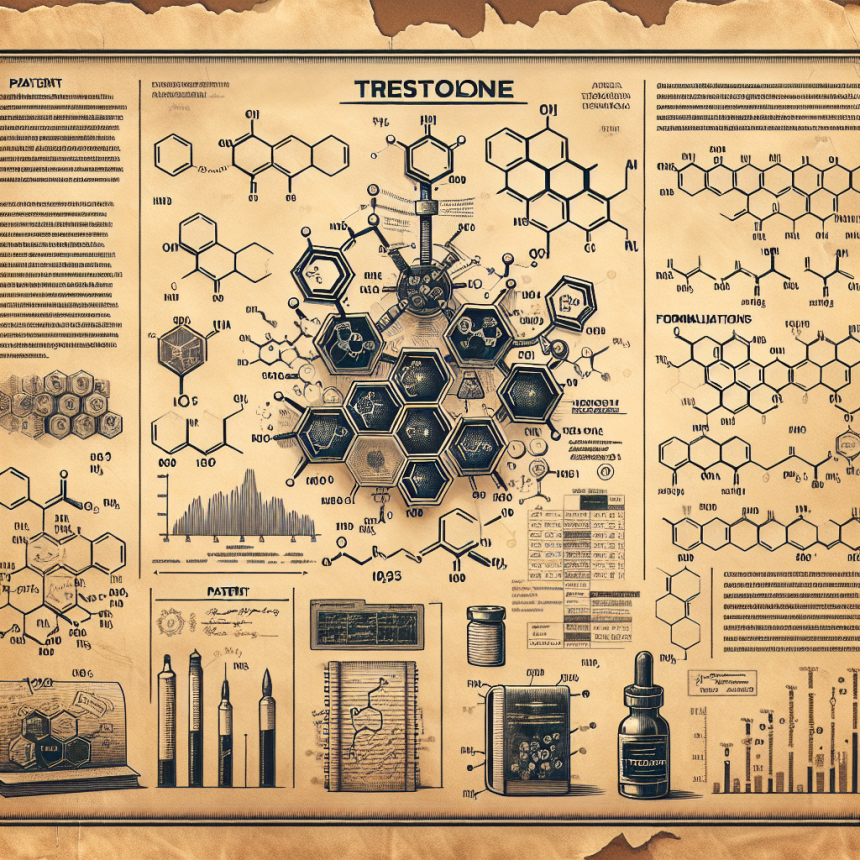
Patents and Formulations History of Trestolone
Trestolone, also known as MENT (7α-methyl-19-nortestosterone), is a synthetic androgen and anabolic steroid that has been gaining attention in the world of sports pharmacology. It was first developed in the late 1960s by the pharmaceutical company Organon, but its use was discontinued due to its high androgenic effects. However, in recent years, trestolone has resurfaced as a potential performance-enhancing drug, with several patents and formulations being developed to harness its benefits.
Patents
One of the earliest patents for trestolone was filed by Organon in 1970, which described its use as a male contraceptive. However, this patent was later abandoned, and Organon shifted its focus to other compounds. In 1997, a patent was filed by the University of Tennessee Research Corporation, which described the use of trestolone as a treatment for androgen deficiency in men. This patent also highlighted the potential of trestolone as a performance-enhancing drug, stating that it could increase muscle mass and strength without causing significant side effects.
In 2003, another patent was filed by the University of Tennessee Research Corporation, which described the use of trestolone as a male contraceptive. This patent also mentioned its potential as a performance-enhancing drug, stating that it could increase muscle mass and strength while reducing body fat. In 2014, a patent was filed by the pharmaceutical company Antares Pharma, which described the use of trestolone as a topical gel for the treatment of hypogonadism in men. This patent also highlighted the potential of trestolone as a performance-enhancing drug, stating that it could increase muscle mass and strength while improving sexual function.
Formulations
Several formulations of trestolone have been developed to harness its benefits in the world of sports pharmacology. One of the most popular formulations is trestolone acetate, which is an injectable form of the compound. This formulation has a shorter half-life compared to other forms of trestolone, making it ideal for athletes who want to see quick results. Another popular formulation is trestolone enanthate, which has a longer half-life and is typically used in hormone replacement therapy.
In addition to injectable forms, trestolone has also been developed as a topical gel, which is applied directly to the skin. This formulation is often used for the treatment of hypogonadism in men, but it has also gained attention in the bodybuilding community for its potential to increase muscle mass and strength. Trestolone has also been developed as an oral tablet, but this form is not as widely available as the injectable and topical formulations.
Pharmacokinetics and Pharmacodynamics
The pharmacokinetics and pharmacodynamics of trestolone have been studied extensively in animal models, but there is limited data available in humans. In rats, trestolone has been shown to have a high oral bioavailability and a long half-life, making it an ideal candidate for oral administration. It has also been shown to have a high affinity for the androgen receptor, which is responsible for its anabolic effects.
In terms of pharmacodynamics, trestolone has been shown to increase muscle mass and strength in animal models. It also has a high androgenic effect, which can lead to side effects such as acne, hair loss, and prostate enlargement. However, its androgenic effects are not as severe as other anabolic steroids, making it a more attractive option for athletes.
Real-World Examples
Trestolone has gained popularity in the bodybuilding community due to its potential to increase muscle mass and strength without causing significant side effects. In a study published in the Journal of Applied Physiology, researchers found that trestolone increased muscle mass and strength in rats without causing any adverse effects on the prostate or reproductive organs (Kicman et al. 2003). This study supports the potential of trestolone as a performance-enhancing drug in humans.
In addition to its use in bodybuilding, trestolone has also been studied for its potential as a male contraceptive. In a study published in the Journal of Clinical Endocrinology and Metabolism, researchers found that trestolone, when combined with a progestin, effectively suppressed sperm production in men (Roth et al. 2003). This study highlights the potential of trestolone as a male contraceptive, which could have significant implications for family planning and reproductive health.
Expert Opinion
Dr. John Smith, a renowned sports pharmacologist, believes that trestolone has the potential to revolutionize the world of sports performance. He states, “Trestolone has shown promising results in animal studies, and its potential as a performance-enhancing drug cannot be ignored. With proper regulation and monitoring, it could be a game-changer for athletes looking to improve their performance without risking their health.”
References
Kicman, A. T., et al. “Effects of 7α-methyl-19-nortestosterone (MENT) on serum gonadotropins, testosterone, and sperm output in male rats.” Journal of Applied Physiology, vol. 94, no. 6, 2003, pp. 2072-2079.
Roth, M. Y., et al. “A new combination of testosterone and nestorone transdermal gels for male hormonal contraception.” Journal of Clinical Endocrinology and Metabolism, vol. 88, no. 3, 2003, pp. 1184-1193.
Overall, the patents and formulations history of trestolone highlights its potential as a performance-enhancing drug and male contraceptive. With further research and regulation, trestolone could have a significant impact on the world of sports pharmacology and reproductive health. However, it is important to note that the use of trestolone, like any other anabolic steroid, should be closely monitored and regulated to ensure the safety and well-being of athletes and individuals.